Deans Kona Recap: The Latest In Triathlon Tech
I watched the whole Kona race and there’s so much exciting triathlon tech to talk about, so no better time than now to do it!
Aerobars
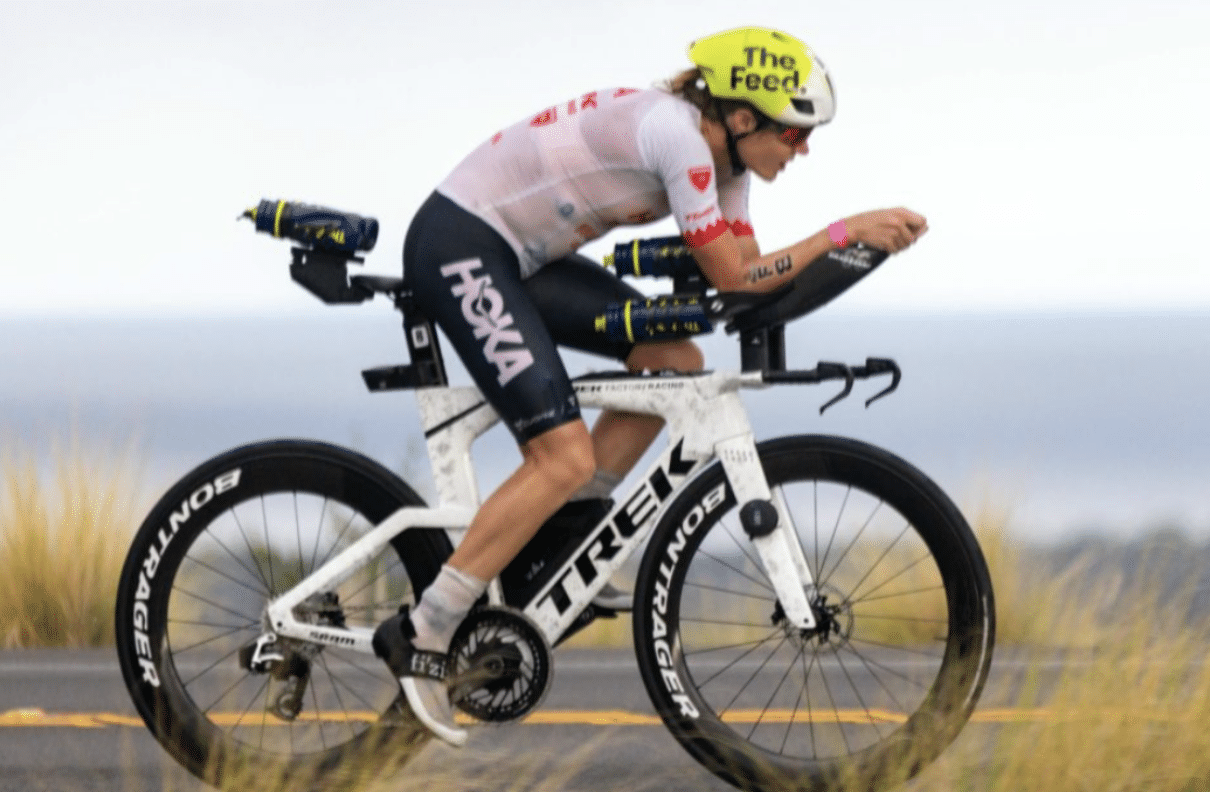
You can’t miss the hi-tech space age cockpits on the front of every tri bike in the Kona pro fields. If used properly, these can result in gains in both comfort and aerodynamics. I’m as careful as I ever have been in recommending any of these as your fit and position is so important and it’s easy to lose track of that in some of these systems. You need to know exactly the position you’re trying to achieve before installing these and I hesitate to even recommend them for these reasons. Yet when every photo you see shows them and you’re convinced you must have, at least make sure you invest in a system that matches your position. These cockpits work best with elbows on the narrower side and extension tilt usually in the higher 15-30deg range. Women’s race winner Taylor Knibb’s below is a great example. She’s one of many great examples of higher front ends working well even for the pros. Comfort is everything, and you don’t need to give up aero and power do be comfortable.
Helmets
Aero helmets are getting bigger with some looking so big that they may need their own checked bag when you travel. I feel like just yesterday it was as easy as choosing between the Rudy Project Wing Dream or Kask Mistral (still two great choices) which tested well for everybody, but now we have many choices. We even saw Magnus Ditlev with a new helmet with a visor extending low enough that it acted as a fairing. What a great idea that is, assuming it worked and he was faster, but my first worry is how much less cooling his head will see without that ventilation. It seemed to work well for him as he was first off the bike and led the race until his body shut down 30min from the finish. At 6’5” he’s among the biggest in the field and seems to focus more on cooling than anybody as we watched him stuff his hat with ice every aid station on the run. This long visor must have been worth the trade off given how much he aero tests. This helmet is so new and rare I could only screenshot it below from a video:
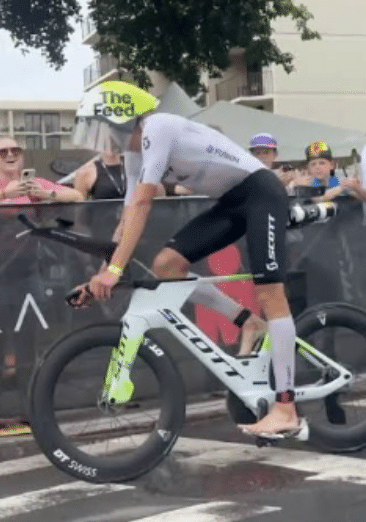
Of course you see the other end with Taylor Knibb opting for an aero road helmet since it was cooler and her testing showed it was only 2 watts slower than her normal full- visored helmet. Two world class athletes, both first off the bike, yet two opposite ends of the helmet choice. One turning the dial toward most aero and the other toward cooling. This is just one small yet important calculation in the many decisions they make in hopes of a top finish.
Hydration
I’m not sure I saw a straw up front on any pro bike. The thought of having to sit up or lift an arm out of the aerobars every time you want to take a drink is concerning from an aero standpoint, but when bike splits are faster than ever this has certainly been accounted for. I suspect a combination of maximizing aero from removing that straw and complications of integrating a typical X-Lab Torpedo hydration system into these fancy cockpits are both factoring in. Most setups run the allowed 2 bottles up front elevated above the forearms and placed as close to the riders chest as possible. Matthew Marquardt is a great example of water bottle placement and many other things. The bottles between the arms and underneath the chest can have a fairing-like impact on lowering your drag when placed just right. Think of it as filling that void just enough to where the air decides to go around the arms instead of between them. I found the below photo on Slowtwitch.com:
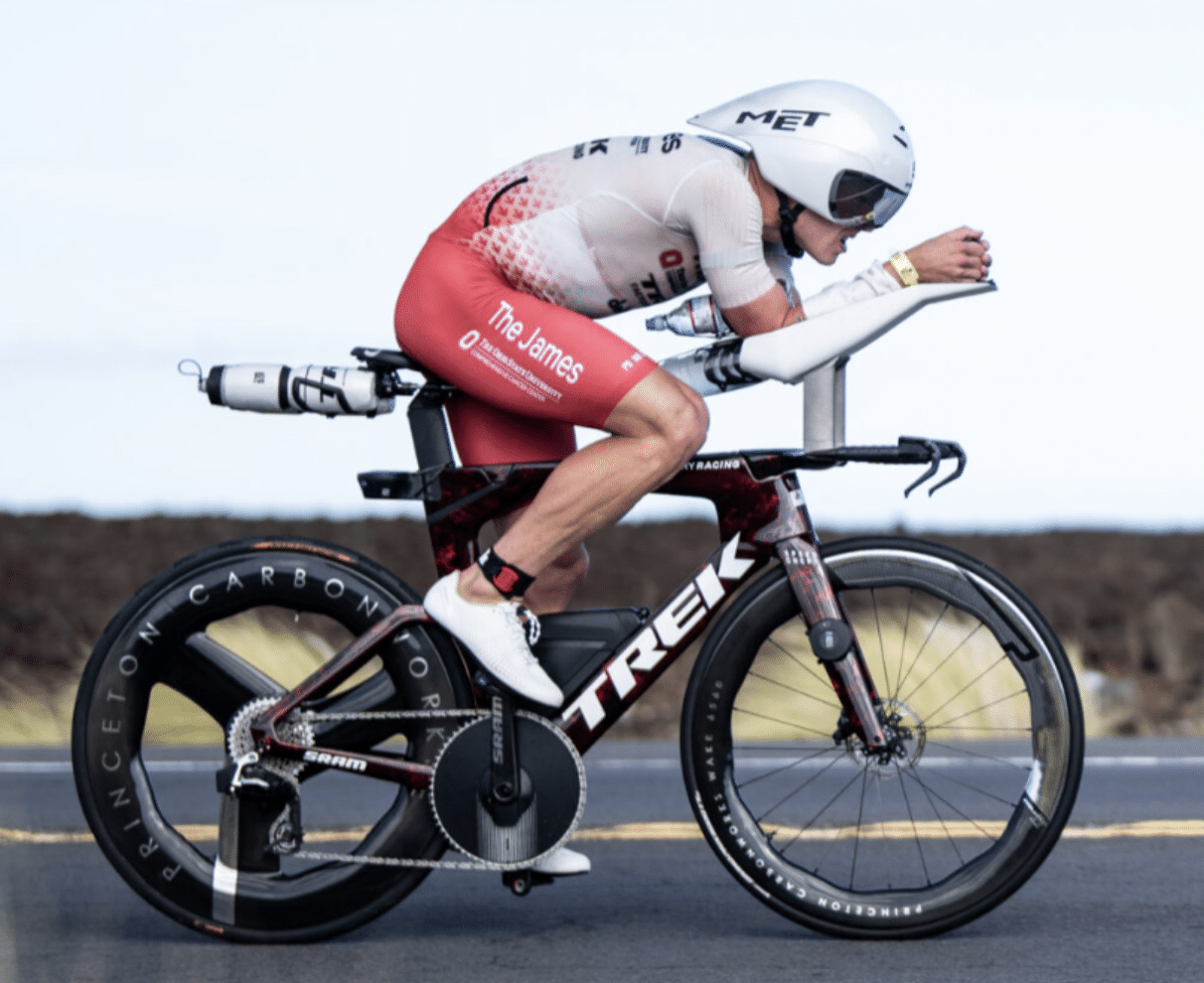
I wouldn’t be surprised if he has the most aero position or best watts/CdA in the men’s field as everything about his position looks fast. He’s high in front and tucked with about a 25deg forearm angle which only tends to work best when your elbows are narrow and shoulders retracted back resulting in his forearms so close to his head. He doesn’t look cramped either. When reach is greater or for taller riders like Ditlev above you’ll notice less aerobar tilt. As reach increases too much tilt can behave like holding a kickboard up in front of you which can slow you down.
Let’s get back to hydration. The completely horizontal bottles behind the saddle have become the norm as well for best aero testing. What used to be an issue with bottles popping out is being fixed by elastic strap systems holding each bottle. Drop a bottle in the past and your carefully thought out nutrition plan is ruined, but with pros now seeing race changing littering penalties for a dropped bottle it’s vital they stay fastened. We saw Ditlev literally stop his bike while leading the race, simply to hand a bottle he couldn’t fasten down to the race official. 15 seconds lost to stopping beats a 1 minute penalty for accidently dropping it. I didn’t see any pros running vertical bottles behind the saddle, so they’re either all on to faster setups or just copying each other. Don’t underestimate how much the latter happens, but my own testing shows horizontal bottles behind the saddle are faster. Just don’t let them pop out!
Body Monitors
Body sensors can be seen all over the pros. White clothing is the choice color for staying cool, and in up close photos of anybody stretched across their bikes reveal all the little shaped sensors attached to them. It’s easy to spot the usual heart rate monitors and core body temp sensors, but now we’re seeing sensors for glucose, electrolytes, and possible other metrics I don’t recognize. Anything that can be monitored to give you even the smallest performance gain on when to fuel, adjust pace, or change hydration/energy mix or frequency is carefully monitored. Especially when it comes to training and racing in the heat, the core body sensor is becoming the must have device just like the power meter was 15 years ago.
Drivetrains
1x cranksets are in, and they’re big in Kona as seen in the above photos. The larger front chainrings allow for straighter chainlines while in the middle of the cassette where the pros spend so much time, and extra gear for the key fast downhills such as descending from the Hawi turnaround. The 2x setups still work best for courses with extensive climbing especially for age group triathletes who will be on course longer and climbing at lower power and speed than the pros. However in Kona, every little edge counts and removing that front derailleur and improving the chainline may be those precious few watts saved needed. The gains improve even more with fraction of a percent saved at a given power using a larger chainring up front and larger cog in back compared to smaller, though these benefits are smaller and just icing on the cake.
Aero wheels
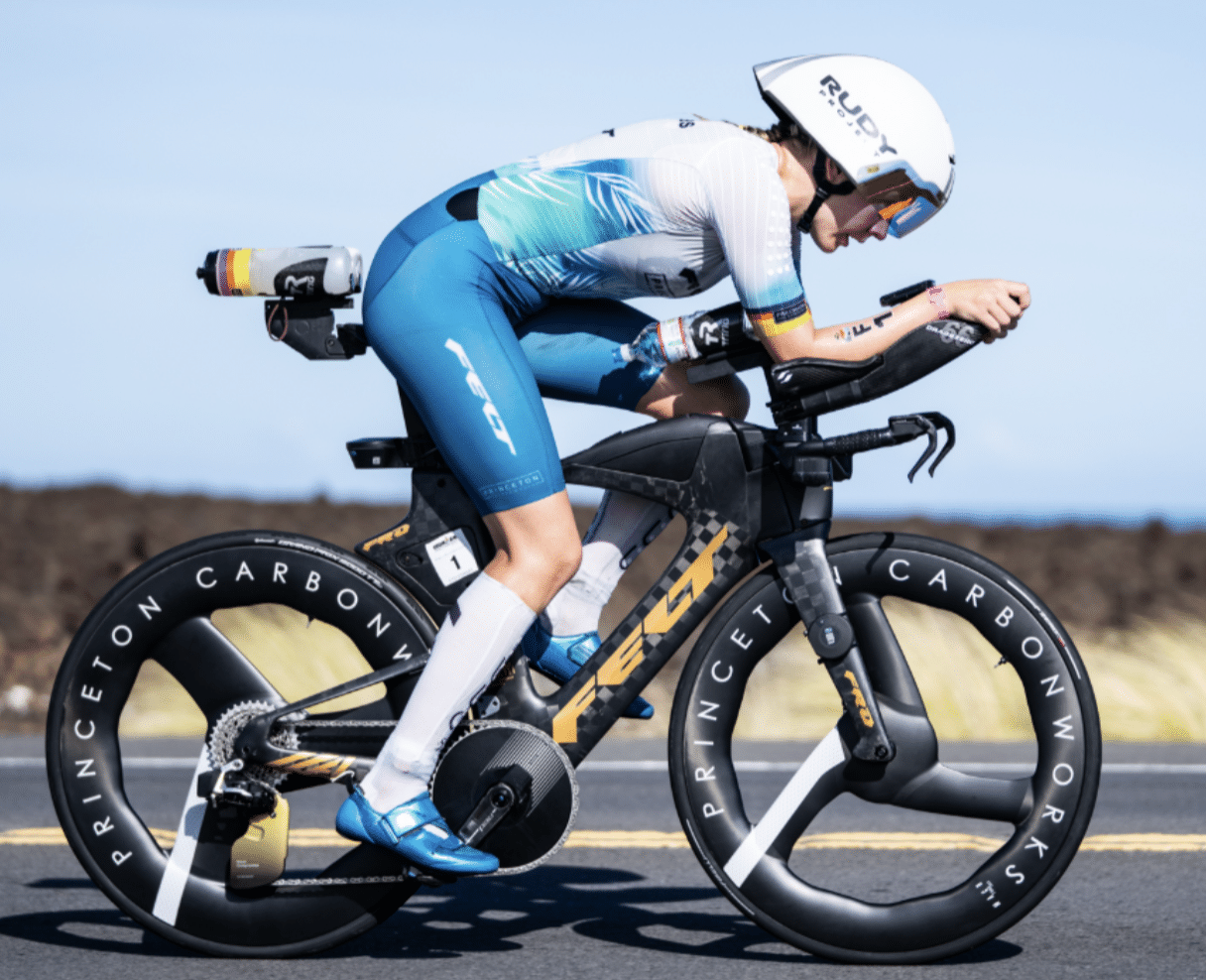
Many still push the largest aero wheels allowed for maximum aero gains. While rear disc wheels still aren’t allowed in Kona, the ‘almost disc’ Hed 180 and similar wheels are showing up. This Kona was windier than normal and I wonder how many wished they’d brought shallower front wheels as we could visibly see even the best bike handling pros steering all over the road as they fought to control their bikes in the crosswinds. Solveig Lovseth pushed the envelope with the same super fast Princeton Mach 7580 TSV3 tri spoke wheels that I ran as a front wheel this past season. I did feel this wheel handled shockingly well in the crosswind and at a tiny fraction of my weight she seemed to handle it well closing in on the leaders late in the bike.
The Racing
The pointy end of Ironman is more of a race than ever before. If you haven’t watched it, the last 10km of the women’s race will be replayed and talked about for years with Solveig taking over the lead with 10k to go passing an imploding Taylor Knibb, then Solveig would completely break down and collapse with just 1km to go. Her mind kept pushing a body that had absolutely nothing left as she collapsed on the pavement several times in a scary yet amazing display of mental and physical toughness that epitomizes the top of this grueling sport. Last year the roles were reversed where both Knibb and Lucy Charles-Barclay falling apart and Solveig passing them both for the win. It seems slowly fading run paces of years back have been replaced by bigger implosions late in the race. It makes sense as all the new body monitoring and nutritional gains allow them to push off all the failure mechanisms as far as they can, and then it’s not just one thing going wrong that stops them but many things at once. Hitting the wall with half a marathon to go will slow anybody, but hit the wall with 2 miles left and the mind is going to try to overpower the body and keep you pushing as you can see and hear the finish line. The longer 20 meter no draft zone is also great for the sport as it breaks the groups up more and forces everybody to have to pace themselves on the bike. I don’t think anybody was seeing any draft benefit at 20 meters with those crosswinds either. What a race!